

Honey Bee Nest Removal: What You Should Know Before Taking Action
It usually starts with a few bees flying around the same spot again and again. Then you notice more activity. This happens because bees are simply looking for a safe place to settle.
Common nesting spots we see at The Original Kent Wasp Control include:
- Roof spaces and lofts
- Wall cavities
- Chimneys
- Garden sheds
- Trees and fence corners
Bees choose these areas because they are warm, dry, and protected from the weather.
How Do You Identify A Honey Bee Nest?
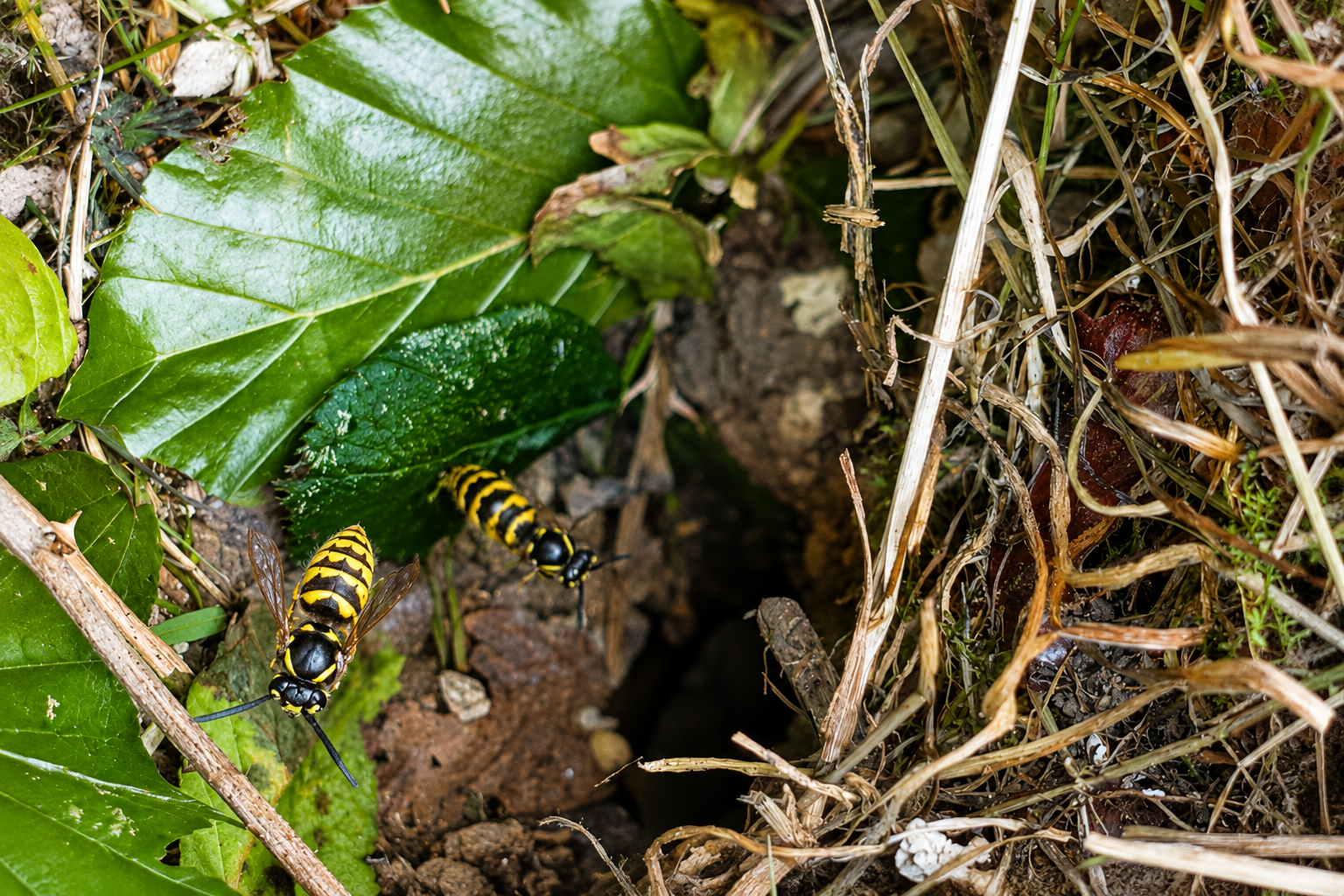
People often confuse bees with wasps, but there are clear differences.
Honey bees usually:
- Look rounder and slightly fuzzy
- Move calmly around flowers
- Fly in a steady pattern in and out of one gap
- Don’t act aggressively unless disturbed
Wasps, on the other hand, look slimmer and move more aggressively. If you’re unsure, we always suggest getting it checked before taking any action.
Do You Need Honey Bee Nest Removal Right Away?
Not always. In many cases, honey bee nest removal is not necessary. We first check whether the bees are actually causing a problem.
You may not need removal if:
- Bees are not entering living spaces
- The nest is not blocking access points
- There is no safety risk to people or pets
- The colony is newly formed and may move on naturally
In fact, a lot of bee swarms tend to hang around only briefly, and then they move on their own, kind of like that.
Why Isn’t Honey Bee Nest Removal Always Necessary First?
Bees are very important pollinators, and they play a big part in the natural world, you know. That’s why we don’t rush into removal.
What we usually consider first:
- Can the bees be safely left alone?
- Is relocation possible instead of removal?
- Is the nest active or just temporary (swarm)?
We always try for the safest result for both you and the bees, without pushing things too fast.
What Should You Avoid When You Find A Bee Nest?
This is where most problems happen.
We strongly advise not to:
- Spray insecticides on your own
- Block the entry point suddenly
- Try to burn or smoke out the nest
- Knock down visible hive structures
- Disturb the colony without protection
These actions can make bees defensive and increase risk.
Can Honey Bees Be Relocated Safely Instead Of Removal?
Yes, in many cases they can.
At The Original Kent Wasp Control, if it’s confirmed to be honey bees, we always look at relocation first.
Typical process:
- Identify the species correctly
- Check nest location and size
- Assess if relocation is possible
- Work with suitable methods or beekeeping support where needed
The goal is always to avoid unnecessary harm.
What Happens When Honey Bees Swarm?
A swarm can look scary, but it’s usually harmless.
A swarm means:
- Bees are moving to find a new home
- They temporarily rest in one place (tree, fence, wall)
- They are less defensive during this stage
What you should do:
- Keep distance
- Keep children and pets away
- Do not spray or disturb them
- Call for professional advice if they settle on a property.
How Can You Prevent Honey Bees Nesting Again?
Once bees have moved on or been safely relocated, it helps to make your property less attractive for future nesting.
Simple steps we suggest:
- Seal cracks in walls and roof edges
- Fix loose tiles and broken brickwork
- Check loft vents and chimney gaps
- Keep sheds and garages properly closed
- Block small unused openings around pipes and cables
These small fixes can reduce the chances of bees returning to the same spot.
What Should You Do If You See A Bee Swarm?
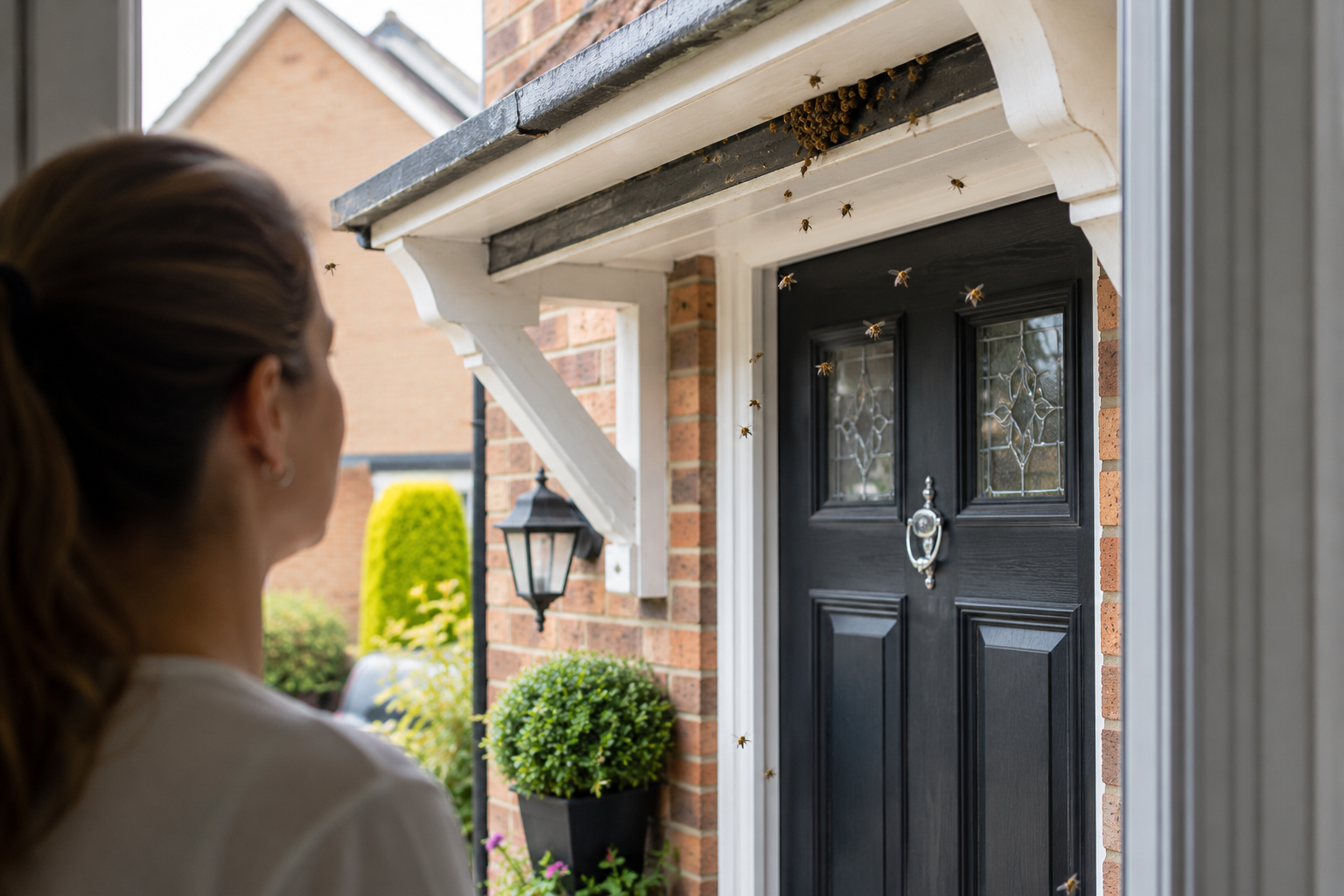
A swarm can look worrying, but it’s usually a temporary stage in the bees’ life cycle.
You may notice:
- A large cluster of bees on a tree or fence
- Loud buzzing in one fixed area
- Bees stay in one place without attacking
What to do:
- Just stay calm and keep some distance
- Don’t spray water or chemicals on it
- Try not to shake or mess with the swarm
- Make sure pets and children are kept away
- If it is still there longer than you thought, get a professional to handle it
Most of these swarms move on by themselves, yet sometimes they linger in places you really don’t want.
Are Honey Bees Dangerous To People?
Honey bees are not naturally aggressive.
They usually sting only when:
- Their nest is disturbed
- They feel threatened
- They are stepped on or handled
For most people, bees are safe when left alone.
However, risk increases if:
- The nest is inside your home structure
- Someone nearby has a bee allergy
- The colony grows close to the entry points
That’s when professional advice becomes important.
Why Is Honey Bee Nest Removal Handled Differently?
We don’t treat bees the same way as wasps.
Our approach is simple:
- Inspect first, don’t rush
- Confirm whether it’s honey bees
- Check if relocation is possible
- Avoid unnecessary removal whenever we can
- Focus on safety for both people and bees
Every case is handled based on real conditions, not assumptions.
Read Also: Hornet Nest Removal | What to Do If Hornets Keep Coming Around Your Home
Frequently Asked Questions
1. Do honey bees leave on their own?
Yes, sometimes. Swarms may move after a short time if they are still searching for a permanent home.
2. Can I block a bee nest myself?
No, blocking the entrance can trap bees inside, making them more active and defensive.
3. How quickly should I act?
You don’t always need to act immediately. But if bees are inside your home structure or causing disruption, it’s best to get it checked early.
4. Will removal kill the bees?
Not always, when possible, we aim for relocation so the colony can survive safely.

Seeing bees close to where you live doesn’t automatically mean there’s some serious issue that needs urgent removal.
In many cases, the best approach is:
- Observe first
- Identify correctly
- Avoid disturbing the nest
- Choose relocation if needed
At The Original Kent Wasp Control, we concentrate on safe and responsible honey bee nest removal. We always put the environment and your own well-being front and centre.
If you’re not sure about what to do next, asking for a professional opinion is the safest first move.